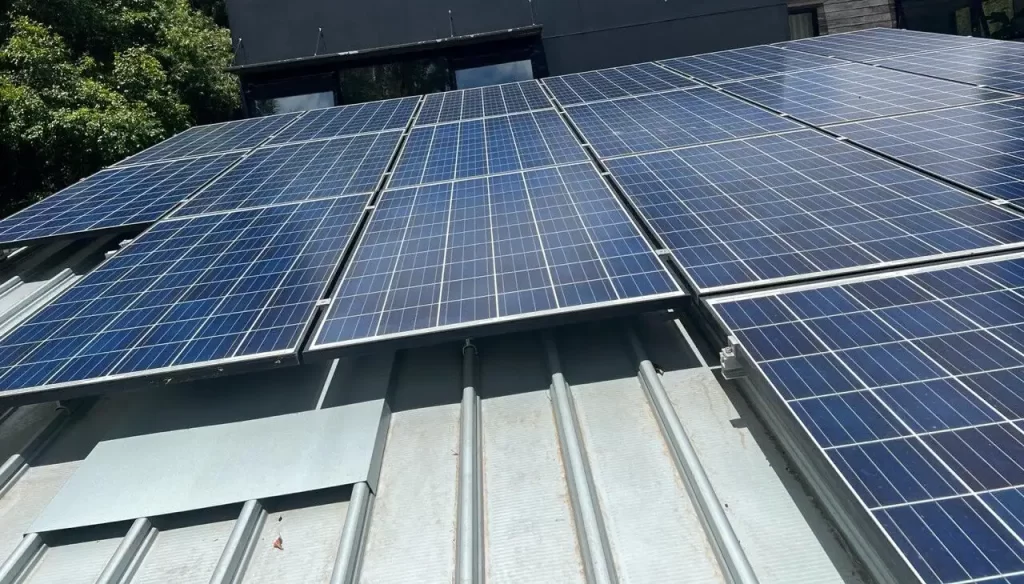
Sydney Air & Solar designs and installs residential solar panel systems across Sydney and NSW. We are an SAA-accredited installer based in Peakhurst, working with Aiko panels, Enphase microinverters, and we hold NSW electrical contractor licence 202500C. Our own team handles every stage, from the site assessment to the handover, with a workmanship warranty of up to 10 years.
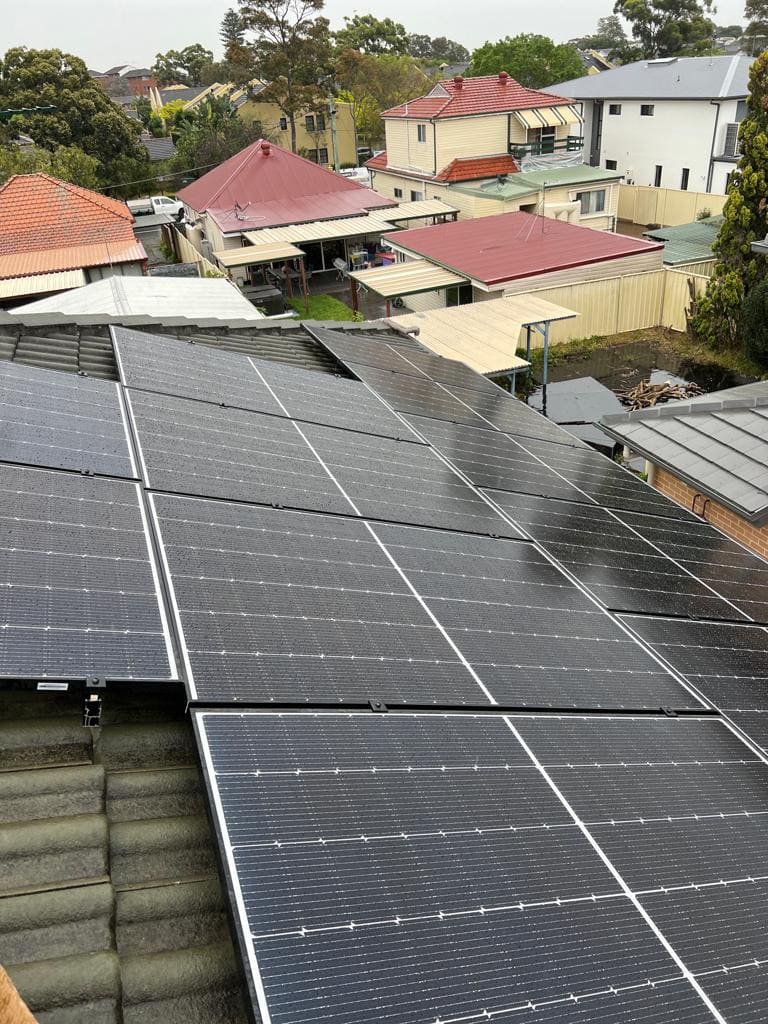
Every installation covers the whole job, not just the hardware on the roof.
All-back-contact cells with no busbars shading the front. Higher output per square metre, which matters on Sydney roofs where usable north-facing space run
Your installation is completed by licensed electricians and tested before handover. Sydney Air & Solar is also a NETCC Approved Seller, committed to raising standards in the renewable energy sector.
Tesla Powerwall 3, Sigenergy SigenStor, Enphase IQ batteries and Sungrow. Powerwall 3 and SigenStor carry their own inverter, which makes for a tidier and often better-value build when a battery is in the plan from the start.
German-engineered, wind-rated and matched to your roof: tile, Colorbond, or flat concrete. The part of the system nobody looks at and everybody relies on for twenty-five years.
System size is set by how much power you use and when you use it, not by roof space alone. We build with Aiko panels rated 465 W to 495 W, so the exact array size depends on which panel suits your roof. A rough guide before we look at your bill.
Two to four people, quarterly bill under [$500], most usage in the evening. A real array lands between 6.5 and 6.9 kW depending on the panel, producing about 27 to 28 kWh a day as a yearly average — near 35 kWh in midsummer, closer to 18 kWh in July.
Larger household, pool pump or ducted air conditioning, someone home during the day. A real array lands between 9.8 and 10.4 kW, producing about 40 to 43 kWh a day on average, and roughly 15,000 kWh over a year.
27 panels or more Big household, an EV in the driveway or planned, or a battery system going in now or later. Around 53 to 55 kWh a day on average, or close to 20,000 kWh a year.
Those decimals matter more than they look. Your STC rebate is calculated on the actual capacity of the array, not on the round number in the brochure, so a 6.9 kW system earns more certificates than a 6.5 kW one. The solutions tailored to a shaded terrace in Hurstville look nothing like the ones for an open north-facing roof in Oatley, and we size accordingly.
Schletter rails and stainless fixings are not the visible part of the job, but on the water they are the part that decides whether the system still looks like this in fifteen years.

We’ve used Aleks and team at two different homes and have referred him to many friends, family and neighbours. Prompt, efficient, safe and tidy. The team are lovely and Aleks goes above and beyond to help clients. Great company!

We engaged Alex and the team to replace a failed ducted aircon, and took the opportunity to install solar at the same time.
The process from inspection and advice, through to specification and quoting…

If you are considering a Solar System , do yourself a favour and talk to Sydney Air and Solar.
From the first part of the process it was made extremely easy to understand all of the options available and what would occur…
We will not be the cheapest quote you get, and it is fairer to tell you why than to let you guess.
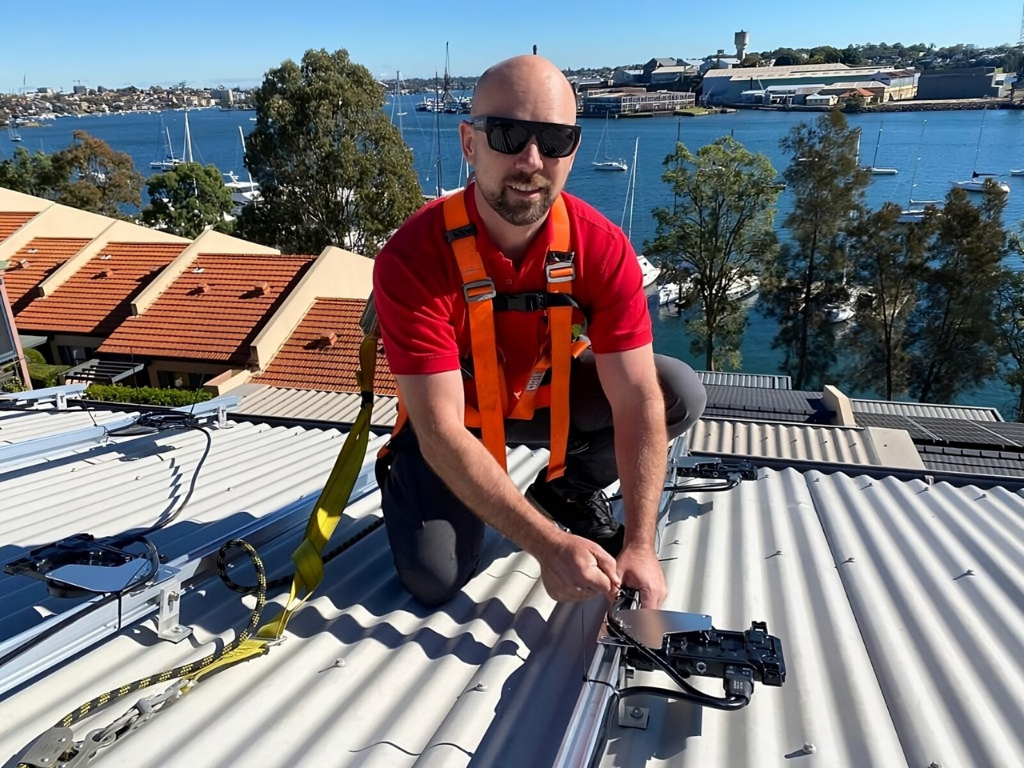
Our technicians are accredited with Solar Accreditation Australia (SAA) accreditation, ensuring full compliance with Australian safety and performance standards.
Aiko panels, Enphase microinverters, Tesla and Sigenergy batteries. Premium brands cost more than volume ones, and they are what we would put on our own homes.
Our local expertise in Sydney's unique climate and roofing conditions allows us to provide tailored solar solutions that maximise energy production.
Every system is installed by our own team. The people who design it are the people who install it, and the people who answer the phone afterwards.
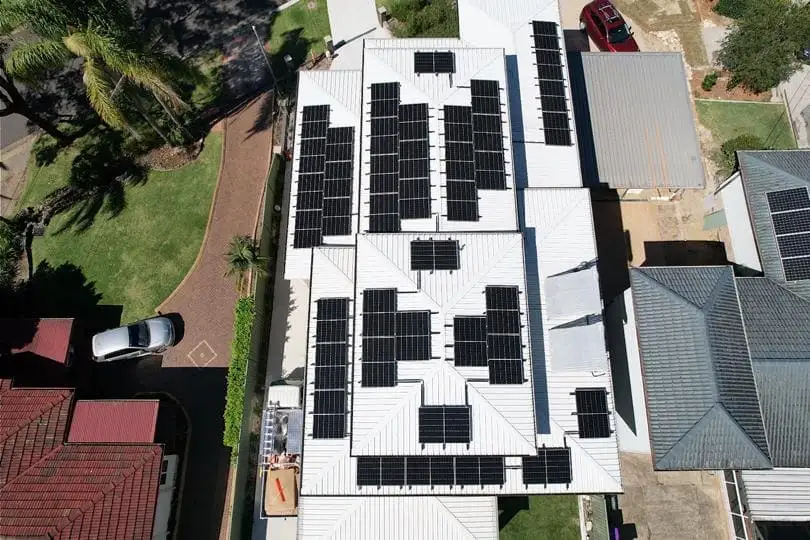
The federal Small-scale Renewable Energy Scheme is the main rebate on a solar installation, and it is not something you claim after the fact. Sydney sits in STC Zone 3, which sets how many certificates your solar power system generates based on its size and the years left in the scheme.
You never handle the certificates. We calculate them, claim them, and the value comes off your invoice before you pay. What you see in your quote is the price after the rebate.
Two things worth knowing. The number of certificates a system earns drops every January, so the same system is worth less each year you wait. And government rebates are tied to accredited installation — they only apply when the system is designed and installed by an SAA-accredited professional.
Solar cuts what you buy during the day. A solar battery cuts what you buy at night, which for most Sydney households is the more expensive half of the bill. It is also the step that turns a good result into genuine energy independence. A Tesla battery paired with the right system size can carry a typical Sydney home through the evening peak on its own stored solar.
Both federal and NSW battery incentives are running, and the NSW scheme changed on 1 May 2026. We handle the eligibility check and the paperwork the same way we do with STCs.
We look at your roof, your switchboard and your last four quarterly energy bills. No obligation.
Panel layout, production modelling, equipment list, written quote — systems designed around your roof rather than a template. Our solar energy team goes through it with you before anything is ordered, then lodges the grid connection application and network approval.
Most residential solar systems are installed in a single day by our own installation team. We test everything, complete the compliance paperwork, set up your monitoring and walk you through how it all works before we leave.
The ones that get the most out of the roof you have. On a typical Sydney roof, usable north-facing area runs out before your energy needs do, so output per square metre matters more than headline wattage. That is why we install Aiko ABC panels.
Most Sydney roofs are. Tile, Colorbond and flat concrete are all standard work for us. Usable area, orientation and shading matter more than the roof material.
Then we design for it rather than around it. On a roof where shade moves across the array through the day, we use panel-level electronics such as Enphase microinverters, so a shaded panel costs you that panel instead of everything wired with it. Heavy shading still reduces total output, but you keep far more of it. On an unshaded roof the calculation is different, and we will tell you so rather than sell you hardware you do not need.
Most residential solar systems are completed in a day. Grid approval before the install and meter reconfiguration afterwards are the parts that add calendar time.
Rooftop solar on a standard Sydney home does not usually need council approval. Heritage-listed properties and some strata buildings are exceptions. Network approval from Ausgrid or Endeavour Energy is required, and we lodge it for you.
It depends on how much power you use in daylight hours. A household with someone home during the day, a pool pump, or an EV charging in the afternoon uses more of its own solar energy and saves more. We model this from your actual bills, not from an average.
Premium equipment, our own crew rather than subcontractors, and a longer warranty. Cheap systems are cheap for reasons that only become visible in year three.
Yes. Every system we design is battery-ready from day one, and a home battery can go in whenever the numbers suit you.
Very little. Occasional cleaning and a periodic inspection. Panel-level monitoring means underperformance shows up as data rather than as a surprise on your next bill.
Check three things before you sign anything: that the designer and installer are SAA accredited, that the electrical contractor licence is real and current, and that the workmanship warranty is written down. Ours are 202500C and up to 10 years, and we are a NETCC approved solar retailer.
Our office is in Peakhurst and we install across Sydney and NSW, for homes and businesses. We work most often through the Georges River and Bayside areas: Hurstville, Kogarah, Beverly Hills, Mortdale, Riverwood, Padstow, Oatley, Penshurst, Bexley and Rockdale, plus the Sutherland Shire. Our local pages for St George, the Sutherland Shire and the eastern suburbs show how many homes in each postcode already have solar and batteries.
Beyond residential solar power, we install battery storage, EV chargers and complete energy solutions for residential and commercial properties across Sydney. Whether it is a home or business, the same team handles the solar system installation from design to handover. Payment does not have to be up front either — there are finance options.