
Last updated: 01 October 2026 · Written by Alex Arnautovic, Solar Accreditation Australia Designer and Installer · Licensed Electrician
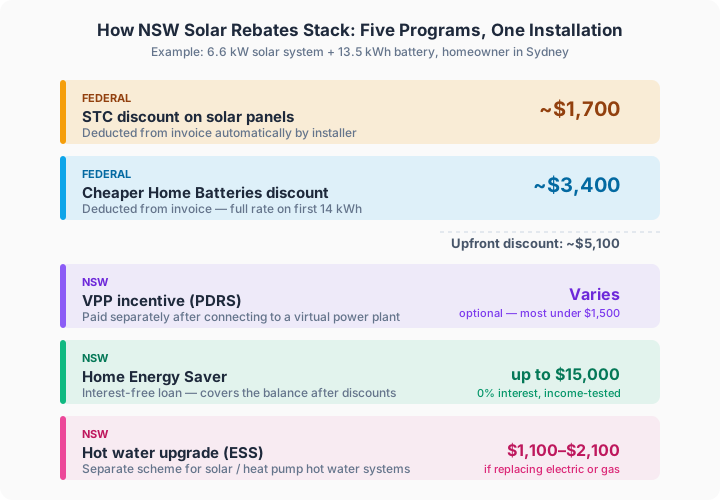
If you are a homeowner in New South Wales looking at installing solar panels or buying a battery, there are five NSW-wide solar rebates and incentives available right now — and they come from different levels of government for different products. The largest is the federal rebate on panels through the STC scheme, worth roughly $1,700 on a standard 6.6 kW solar system. A separate federal battery rebate discounts storage. NSW adds a VPP incentive for connecting a battery to the grid, interest-free loans of up to $15,000, and a rebate on solar hot water systems. On top of those five, some local councils runs a Sustainability Rebates program that pays extra on solar panels, batteries and EV chargers.
Key Takeaways
- The widely quoted “$7,000 solar rebate” never existed — it was an interest-free loan program that closed in 2024
- The federal battery discount still requires rooftop solar; the NSW VPP incentive does not (changed 1 July 2026) — most guides get this wrong
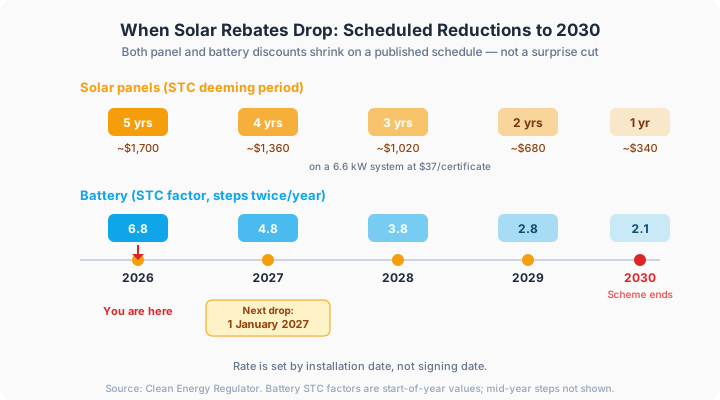
- Both panel and battery discounts shrink on a published schedule through 2030, and the rate is set by your installation date, not by when you sign
- If your council runs a top-up like Randwick’s, it usually shares one combined cap with the council’s other sustainability rebates — check before you stack several categories at once
| Program | Who runs it | What it covers | Roughly worth |
|---|---|---|---|
| STC discount (SRES) | Federal | Solar panels | ~$1,700 on 6.6 kW |
| Cheaper Home Batteries | Federal | Battery storage | ~$252/kWh, first 14 kWh |
| VPP incentive (PDRS) | NSW | Connecting battery to VPP | Varies by certificate market |
| Home Energy Saver | NSW | Interest-free loan for solar and battery | Up to $15,000 |
| ESS hot water | NSW | Solar / heat pump hot water systems | Varies by system |
| Sustainability Rebates | Randwick City Council (LGA-specific) | Panels and battery | 10%, up to $500 (panels) / $1,000 (battery)/ $250 (EV Charger) |
The council row only applies if your property is in that council’s area — it is not a NSW-wide program like the other five. We cover it further down, under “A council top-up: Randwick City Council’s Sustainability Rebates”.
Every number in this table is an approximation. The panel and battery discounts are calculated from a formula, not a fixed amount, which is why two quotes on the same hardware can show different figures. What the formulas are, and what makes them move, is what the rest of this page covers.
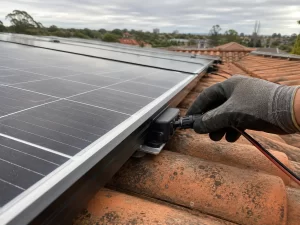
This solar power rebate has been available since 2011 and is the largest single NSW solar discount for homeowners installing solar panels. It works through the Small-scale Renewable Energy Scheme and its small-scale technology certificates (STCs): your installer claims them and deducts their value from your invoice, so you see the solar discount as a lower upfront cost rather than a payment.
The formula:
Rated capacity (kW) × zone rating × deeming period = number of STCs Number of STCs × certificate market price = your discount
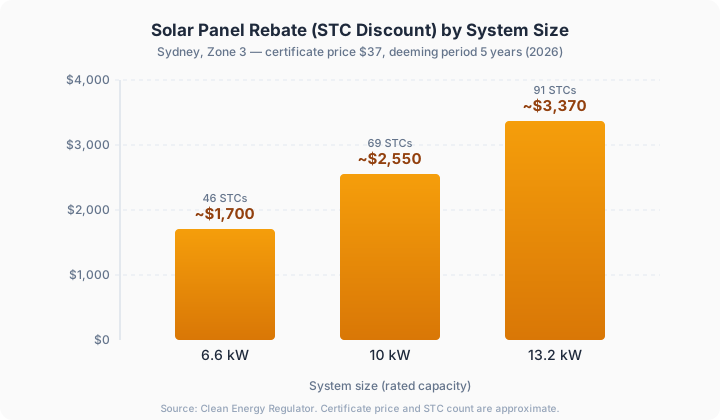
Sydney sits in Zone 3 with a rating of 1.382. For installations completed in 2026, the deeming period is 5 years — the number of full years remaining until the scheme ends on 31 December 2030. The market price of a certificate has sat in the high $30s through 2026, with $40 available through the Clean Energy Regulator’s clearing house. At $37:
| System size | STCs created | Approximate discount |
|---|---|---|
| 6.6 kW | ~46 | ~$1,700 |
| 10 kW | ~69 | ~$2,550 |
| 13.2 kW | ~91 | ~$3,370 |
Two things worth knowing before you compare quotes.
The STC count is calculated on the actual rated capacity of the panels on your roof, not a rounded number. A 6.9 kW array creates more certificates than a 6.5 kW one, even though both get called “a 6.6 kW system” in conversation. If your quotes show different rebate amounts on what looks like the same system size, check the actual wattage. That is usually the reason.
The certificate price moves. The $37 used above is a mid-2026 figure. Your installer uses the price at the time of claiming, which means the discount on two identical systems installed a month apart can differ. This is normal and not a sign that someone is padding the quote.
We explain how much solar you can expect to save on a solar installation in Sydney.
Source: Clean Energy Regulator — Small-scale Renewable Energy Scheme
If you have seen “$7,000 solar rebate” or “$7,000 government rebate NSW” while searching, here is where that number comes from and why it does not exist.
The program was called Empowering Homes. It ran from 2018 to 2024 and offered a zero-interest loan of up to $14,000 for solar panels with a battery. It was not a rebate or a discount — it was a loan. The effective benefit worked out to roughly $7,000 in avoided interest over the loan term, which is how the figure entered the conversation and stayed there.
Empowering Homes closed in 2024. Its successor is the Home Energy Saver program, which lends up to $15,000 at zero interest. We cover it further down, under “NSW Home Energy Saver: interest-free loans for solar”.
There has never been a flat $7,000 NSW rebate paid by any level of government for solar. What exists is a formula-based solar panel rebate (above), a formula-based discount on batteries (below), and a loan. Each produces a different rebate amount depending on what you install. The round figure is a casualty of a game of telephone that started with a loan product and lost the word “loan” somewhere along the way.
If someone quotes you a $7,000 rebate, ask them to name the program.
Two separate programs discount solar battery storage, and they stack. Whether you are buying a battery alongside new panels or adding one to an existing solar system, both the federal and NSW solar battery programs apply.
This works the same way as the panel discount: certificates are created, sold, and the value comes off your invoice as an upfront deduction. Since 1 May 2026 the rate tapers by capacity:
| Usable capacity | Rate per kWh |
|---|---|
| First 14 kWh | ~$252 |
| 14 to 28 kWh | ~$151 |
| 28 to 50 kWh | ~$38 |
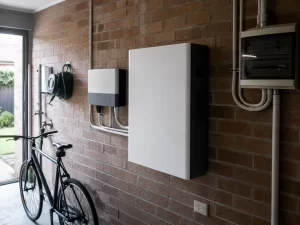
On a 13.5 kWh battery that is about $3,400 before you pay anything. On a 10 kWh battery, about $2,500.
The rate also falls on a fixed schedule. The STC factor that sets the battery discount is 6.8 from May to December 2026 and drops to 5.7 on 1 January 2027, so the same battery earns about 16% less from that date. The rate is locked in on the day the battery is installed (DCCEEW).
The NSW Peak Demand Reduction Scheme pays a separate incentive after installation for connecting your storage system to a virtual power plant so the grid can draw on it during evening peaks. The rebate amount depends on the market price of peak reduction certificates, and most households receive considerably less than the $1,500 figure quoted across the industry.
Whether the VPP trade is worth making is a separate question. The majority of Australian battery owners — 76 per cent according to the ACCC — have looked at VPP offers and declined.
If you have seen figures of $1,600 to $2,400 for installing a home storage system in NSW, that was BESS1, and it stopped on 1 July 2025 when the federal program launched. The federal program is larger and covers the same ground.
For the full mechanics — how the taper works, what the VPP costs you in practice, and who should and should not connect — see our NSW battery rebate guide. If you are considering a battery storage installation, these rebates and incentives for panels and batteries determine most of the upfront cost reduction.
This is not a solar energy rebate in the usual sense. The NSW Home Energy Saver program offers interest-free loans, funded by the NSW Government, for rooftop solar, storage and related upgrades. It matters here because it is commonly searched as a rebate, and because it covers what the other programs do not: the gap between the discounted price and what you can afford today.
The money is government-funded, but you don’t apply to a government office for it. The NSW Government, through the Energy Security Corporation, has committed the funding to two private finance providers — Brighte and Plenti — who assess applications, approve loans and manage repayments. You apply through one of them, not through NSW Climate and Energy Action.
The program lends up to $15,000 at zero per cent interest, repayable over up to ten years. NSW residents who are homeowners with a combined household income up to $210,000 are eligible.
A discount of up to $4,000 for lower-income households — combined income up to $80,000 — has been flagged as coming but is not yet available at the time of writing.
The interest-free loan sits alongside both the federal panel and battery discounts. In practice, you apply the upfront discounts first and the loan covers the remaining balance or part of it.
We are accredited to help with Home Energy Saver applications. See our finance options or ask us when we quote.
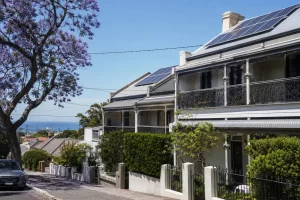
The five programs above run across all of NSW. Some local councils add a sixth layer on top of them for residents in their own area. Randwick City Council is one example, and it runs a Sustainability Rebates program that pays extra on both solar panels and batteries.
The council pays 10% of the cost, up to $500, on rooftop solar for a household. On a solar battery, the rate is the same 10%, up to $1,000. Apartment blocks and businesses in the Randwick local government area get higher caps — up to $5,000 on panels and $2,000 on a battery for an apartment block, and up to $1,000 on either for a business.
The EV charger rebate is the most generous of the three, and it is easy to miss because the rate is different. Randwick pays 25% of the cost, up to $250, for a household charger. An apartment block installing shared charging can claim 25% up to $5,000, and a business 25% up to $1,000. It is two and a half times the rate that applies to panels and batteries, and for an apartment block it is the single largest rebate the council offers.
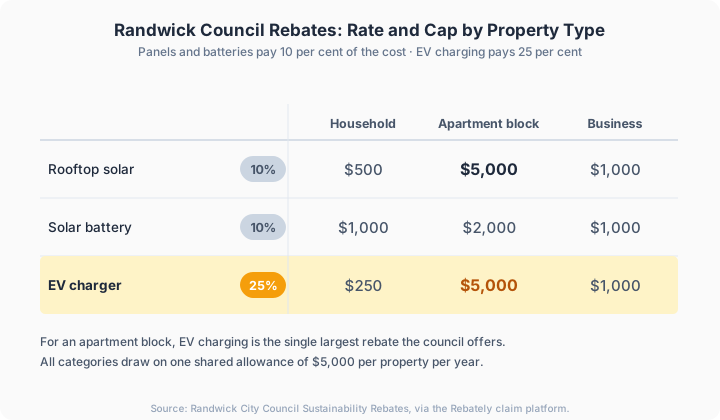
This stacks on top of the federal STC discount and the federal battery discount above — the council rebate is explicitly designed as an addition, not a replacement. The catch is a shared cap: Randwick Council pays out up to $5,000 total per property per year across all of its sustainability rebates combined (solar, battery, hot water, insulation, rainwater tanks and the rest), so claiming several categories at once eats into the same pool.
That matters most for an apartment block: a full $5,000 EV charging claim would use the year’s allowance on its own, leaving nothing for panels or a battery until the next one. Worth confirming the order of claims with the council before lodging.
To qualify, the property has to sit inside the Randwick local government area, the installation has to be done by a SAA Energy Council or NETCC Accredited Installer, and the claim has to be lodged within 12 months of installation. The application itself goes through a third-party platform called Rebately: you submit a recent electricity bill, a photo of the installed system and a copy of the installer’s invoice, and the council pays the approved rebate by electronic bank transfer.
If you are outside the Randwick LGA, check whether your own council runs something similar — a number of Sydney councils have comparable sustainability rebate schemes, though the rates and caps differ by council and we have not verified them here.
Source: Randwick City Council — Sustainability Rebates
NSW runs a separate rebate for solar hot water systems and heat pump hot water systems under the Energy Savings Scheme. This is not the same program as the panel or battery discounts, and the money comes from a different set of certificates — energy savings certificates rather than small-scale technology certificates.
Like the panel and battery discounts, it’s a point-of-sale deduction, not a reimbursement.
What you receive depends on the system and what it replaces. A heat pump replacing an old electric resistance tank qualifies for both the state ESS discount and federal STCs. The combined discount typically lands between $1,400 and $1,800 for a heat pump, or $1,600 to $2,100 for a solar hot water system. A heat pump replacing gas qualifies for less on the state side, typically $1,100 to $1,500 combined.
One rule worth knowing: a minimum customer contribution of $200 excluding GST applies. The discount cannot cover the full price of the system. This rule was tightened from $33 to prevent the “free heat pump” offers that led to poor-quality installations.
You must be replacing an existing electric or gas hot water system, not an already energy-efficient one. The new unit must be on the approved product list, and the work must be done through a licensed installer partnered with an accredited certificate provider.
Source: NSW Government — hot water upgrade incentive
This is one of the least publicised programs in NSW, and none of the guides ranking for “solar rebate NSW” mention it.
A solar feed-in tariff is not a rebate, but it comes up in every conversation about one, because people want to know what they earn from excess solar electricity they send back to the grid.
In NSW, there is no mandatory minimum NSW feed-in tariff. Each electricity retailer sets its own rate. The IPART benchmark for 2026–27 is 3.4 to 6.5 cents per kilowatt-hour, down from 4.8 to 7.3 the year before. Actual retailer rates range from zero to about 10 cents, depending on the plan.
Where it gets more interesting is time-of-use export. IPART’s evening export benchmarks for 2026–27 run 17 to 20 cents per kilowatt-hour during the 4 pm to 9 pm window — and some retailers pay above those benchmarks. These are the rates battery owners use to export into the evening peak on their own schedule, without joining a VPP.
The feed-in tariff matters when you are sizing a system, because a larger system exports more only if the grid will accept it. That depends on which distributor your property connects to, and Sydney is split between two:
| Distributor | Covers | Export limit per phase |
|---|---|---|
| Ausgrid | Eastern Sydney, inner west, northern suburbs, Hunter, Central Coast | 10 kW |
| Endeavour Energy | Western Sydney, Blue Mountains, southern suburbs, Illawarra | 5 kW (standard) |
On a single-phase connection, which is what most houses have, the Endeavour standard limit is 5 kW. Their Flexible Exports program raises this to 10 kW for roughly 95 per cent of the year, curtailing only when the local grid needs it — but that still means a 13 kW system on the roof in Endeavour territory will hit the limit during the hours when the grid is most congested. In Ausgrid’s network the same system exports at 10 kW without curtailment.
This is the reason no honest installer will size a system by panel count alone without knowing your address.
The conclusion that nobody writes, because it lowers the sale: a system larger than what you can consume and export within your distributor’s limit earns less per kilowatt invested. Sometimes the oversized system is still the right call — because you plan to add a battery, an EV charger, or a heat pump that soaks up the midday surplus. But that is a plan, not a default.
Until recently, NSW’s solar rebate schemes assumed a house with a rooftop you own. Solar for apartment residents was largely excluded. That is changing.
The NSW PDRS battery activities are staged by building type. Home and small business installations opened on 1 July 2026. Apartment, business and commercial installations open on 1 September 2026.
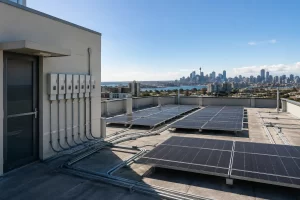
For strata buildings, the practical constraint has always been the shared roof. Shared solar, where a building installs panels collectively, is now recognised under NSW schemes. Each owner’s share of the generation is metered separately, and the certificates are allocated on the system as a whole.
If you are on a strata committee considering solar or battery storage for the building, the timing matters. The regulatory barrier for battery installations in apartments drops in weeks. Whether the practical barriers — body corporate approval, roof access, metering configuration — drop with it is a separate question, and one worth answering before the scheme opens.
We work with strata committees. If you are exploring shared solar or battery storage for a building, we can tell you what applies.
Here are the eligibility requirements for each program. To qualify for the federal discounts, you need to install solar or storage through an accredited provider.
The line that trips people up: nearly every guide online either conflates these two rules or applies one to both. They are different programs with different conditions — check which one governs the rebate you’re chasing.
If you are unsure what applies to your situation, we cover this during a standard solar installation quote.
For the panel and battery discounts, you do not apply at all.
Your installer calculates the certificates, claims them with the Clean Energy Regulator, and deducts the value from your invoice. The government rebate is applied upfront — there is no form for you, no waiting period and no reimbursement to chase. The scheme runs through the installer, not the homeowner. If someone asks you to claim certificates yourself, something is wrong.
The NSW VPP incentive works differently — you shop around and sign a contract, you don’t lodge a claim. There is no form and no reimbursement. Instead, you sign a demand response contract (minimum 12 months) directly with an IPART-accredited business — often the VPP operator itself — and nominate them as the party entitled to create the certificates from your battery. That business creates and sells Peak Reduction Certificates on the open market and uses part of the proceeds to sweeten your deal, as an upfront payment, ongoing payments for the electricity they draw from your battery, or both. NSW Government does not pay you directly, does not set the price of the certificates, and is not a party to the contract — it only accredits the businesses allowed to offer one. You are not required to use any particular provider, so it pays to compare offers. You can only access this incentive once every 3 years per property.
The Home Energy Saver loan is a standalone application, not through a government office but through one of the two finance providers — Brighte or Plenti — the NSW Government has funded to deliver it. We can help with that when we quote.
The panel discount shrinks every January. On 1 January 2027 the deeming period drops from 5 years to 4, reducing the number of certificates a system creates by roughly 20 per cent. On a 6.6 kW system at current certificate prices, that is about $340 less for the same panels.
The battery discount shrinks every January and July. The next step is 1 January 2027, when the STC factor falls from 6.8 to 5.8. On a 13.5 kWh battery, roughly $550 less.
Both schemes run to 2030. There is no closing date and no supply crisis. There is a published schedule of reductions.
One rule that catches people: the rate is set by your installation date, not by the date you sign or pay a deposit. The Clean Energy Regulator has said this explicitly. Signing in December does not lock in the 2026 rate if the solar system goes on the roof in January.
It depends on the solar system you install. A NSW homeowner putting up 6.6 kW of panels with a 13.5 kWh battery can expect roughly $1,700 off the panels as the federal rebate, $3,400 off the storage, and the VPP incentive on top if they choose to connect. That is around $5,100 in upfront discounts before the VPP, and separately, an interest-free loan of up to $15,000 if the remaining upfront cost is a barrier.
For the federal discount, yes — the system must be installed with rooftop solar, existing or new. NSW removed the solar requirement for its VPP incentive on 1 July 2026, but that is the smaller payment.
No single calculator covers all programs. The panel discount follows the formula under “The solar panel rebate: how STCs reduce your upfront cost” above, and the storage discount follows the tiered rates under “Solar battery rebates and incentives in NSW”. We calculate both in your quote.
The federal panel and storage discounts apply to strata installations where the building owns the system. The NSW PDRS opens to apartments and commercial buildings on 1 September 2026.
For households, no. The panel discount and the NSW VPP incentive are not assessable income on a residential installation. If you are claiming as a business, the treatment is different — speak to your accountant.
Yes. All solar rebates available in NSW stack. The federal panel discount, the federal storage discount and the NSW VPP incentive can all be claimed on the same installation. The Home Energy Saver loan can cover any remaining balance after the discounts. If your council runs its own sustainability rebate — Randwick City Council’s, for example — that stacks on top as well, up to its own separate cap.
Yes. The storage discount applies to new systems installed alongside an existing rooftop solar array. The panel discount, naturally, only applies to new panels.
Five programs, three levels of government, and a formula that gives a different number on every roof. Rather than guessing from a table, ask your solar company to calculate the exact discount — or send us the system size you are considering and we will do it for you.
No site visit needed for that answer. It costs nothing and commits you to nothing.
Calculate My Solar Rebate · Get a Quote for Solar Installation
Sydney Air & Solar · Family owned since 2000 · Peakhurst · Licensed Electrician · SAA Accredited Designer and Installer · NETCC Approved Retailer · 4.9 from 69 reviews on SolarQuotes
About the author
Alex Arnautovic founded Sydney Air & Solar in 2000 and still designs and signs off the systems the team installs. He is a Solar Accreditation Australia Designer and Installer, a licensed electrician, and a Licensed Aircraft Maintenance Engineer who spent 16 years maintaining Qantas aircraft. He also trains the next intake of solar installers.